
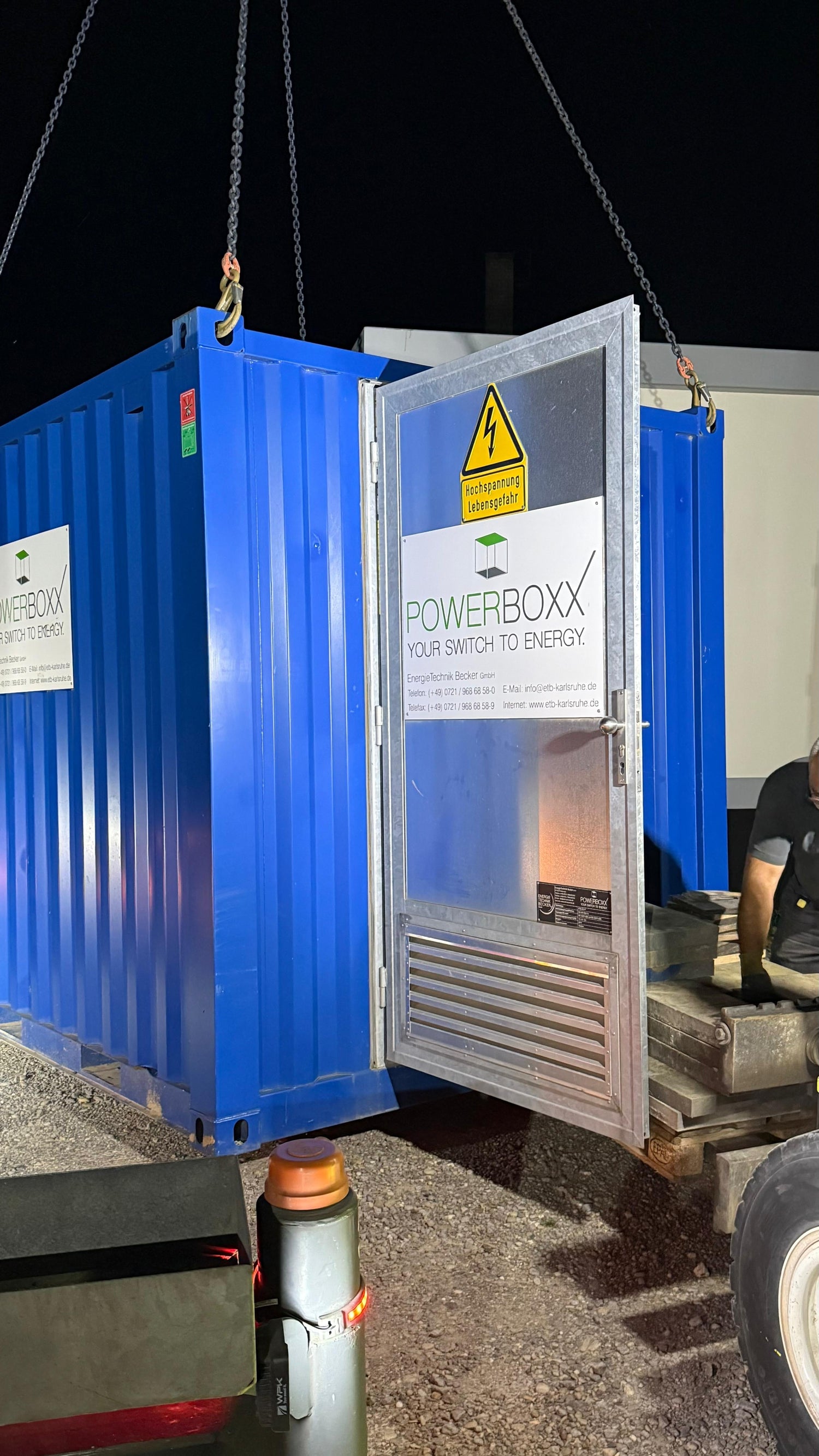
Construction Site Power Supply: Not all solutions are equal
Anyone planning a construction site will sooner or later encounter the terms construction power distribution board and construction power station. Both terms are often used synonymously, although they fulfill technically different tasks.
The result: many companies choose a solution that is either oversized or not powerful enough for the actual project.
But what is the difference between a construction power station and a construction power distribution board? Which solution is suitable for which requirements? And when does a custom-designed construction power station make sense?
In this article, we explain the most important differences in a simple and understandable way.
What is a construction power distribution board?
A construction power distribution board is the classic solution for small to medium-sized construction sites. It serves to distribute the existing construction power connection to various consumers.
Typical components of a construction power distribution board:
-
Sockets of various power classes
-
Fuses
-
Residual current devices (RCD)
-
Protection and switching technology
-
Housing for outdoor use
The construction power distribution board is usually connected directly to an existing mains connection and distributes power to the required consumers.
Typical areas of application
-
Single-family houses
-
Residential construction
-
Smaller commercial buildings
-
Renovations
-
Conversions
-
Events
For many standard construction sites, a construction power distribution board is completely sufficient.
What is a construction power station?
A construction power station goes significantly further than a classic construction power distribution board.
It often forms the central energy supply for larger construction and infrastructure projects and can integrate additional technical components in addition to low-voltage distribution.
Depending on the design, a construction power station includes:
-
Medium-voltage technology
-
Transformers
-
Low-voltage distribution
-
Measurement and protection technology
-
Grid monitoring
-
Load management
-
Remote monitoring systems
A construction power station thus not only distributes power but often also converts and provides the required power.
The most important differences at a glance
| Feature | Construction Power Distribution Board | Construction Power Station |
|---|---|---|
| Area of application | small to medium-sized construction sites | large construction sites and industrial projects |
| Power requirement | low to medium | high to very high |
| Transformer integrated | No | Often yes |
| Medium voltage possible | No | Yes |
| Individual planning | rarely necessary | often necessary |
| Expandability | limited | very flexible |
| Backup power solutions | mostly not | possible |
| Project duration | short to medium | medium to long |
When is a construction power distribution board sufficient?
A construction power distribution board is the right choice when:
-
a grid connection is already available
-
only a few consumers need to be supplied
-
no high load peaks occur
-
the construction site remains manageable
Typical examples:
-
New construction of a single-family house
-
smaller commercial properties
-
renovations
-
interior fit-out projects
In these cases, the use of a complex construction power station is usually not economical.
When is a construction power station needed?
As soon as larger capacities are required, classic construction power distribution boards reach their limits.
A construction power station is often used for:
Large construction sites
Multiple cranes, container facilities, pumps, and machines simultaneously require high power.
Infrastructure projects
Road construction, tunnel construction, bridge construction, or rail infrastructure place special demands on the energy supply.
Industrial projects
Production facilities, temporary manufacturing areas, or extensive expansion measures often require a powerful power supply.
Energy projects
Wind farms, solar parks, battery storage, or grid connection points often require individually planned construction power stations.
Why correct dimensioning is crucial
A common source of error is underestimating the actual power requirement.
The consequences can be:
-
power outages
-
overloads
-
machine downtimes
-
construction delays
-
additional costs
Therefore, it should be checked already in the planning phase:
-
Which consumers will be used?
-
Which connection capacities are required?
-
Which load peaks occur?
-
How long will the system be used?
-
Are future expansions planned?
A professional load analysis prevents costly wrong decisions.
Modern construction power stations offer significantly more possibilities
The demands on construction sites are changing.
Increasingly, these include:
-
charging infrastructure for electric vehicles
-
digital construction site containers
-
energy-intensive specialized machinery
-
mobile computing and communication technology
-
intelligent monitoring systems
Modern construction power stations can flexibly meet these requirements while ensuring maximum operational reliability.
Individual construction power stations instead of standard solutions
For larger projects, standard products are often no longer sufficient.
Therefore, many companies rely on individually planned construction power stations.
The advantages:
-
performance precisely matched to the project
-
optimal utilization of available grid capacities
-
high supply security
-
flexible expansion options
-
economical operation over the entire project duration
Especially for complex infrastructure and industrial projects, this individual planning pays off in the long run.
Why EnergieTechnik Becker is the right partner
EnergieTechnik Becker develops individual solutions for the safe and reliable energy supply of construction sites, industrial plants, and infrastructure projects.
We view each construction power station as part of a holistic energy system.
Our services include:
-
technical consulting
-
load analyses
-
engineering and planning
-
individual system design
-
manufacturing and implementation
-
commissioning
-
service and support
This creates solutions that are precisely tailored to the requirements of the respective project.
Conclusion: Construction power distribution board or construction power station?
The choice of the right solution depends significantly on the size, power requirements, and complexity of the project.
A construction power distribution board is suitable for smaller construction sites with manageable energy demand.
A construction power station is the right choice when high power, maximum operational reliability, and individual requirements are paramount.
Those who rely on professional planning early on lay the foundation for a trouble-free construction process and a reliable energy supply.
EnergieTechnik Becker supports companies in developing the right solution for their construction site power supply – from the initial analysis to successful commissioning.