
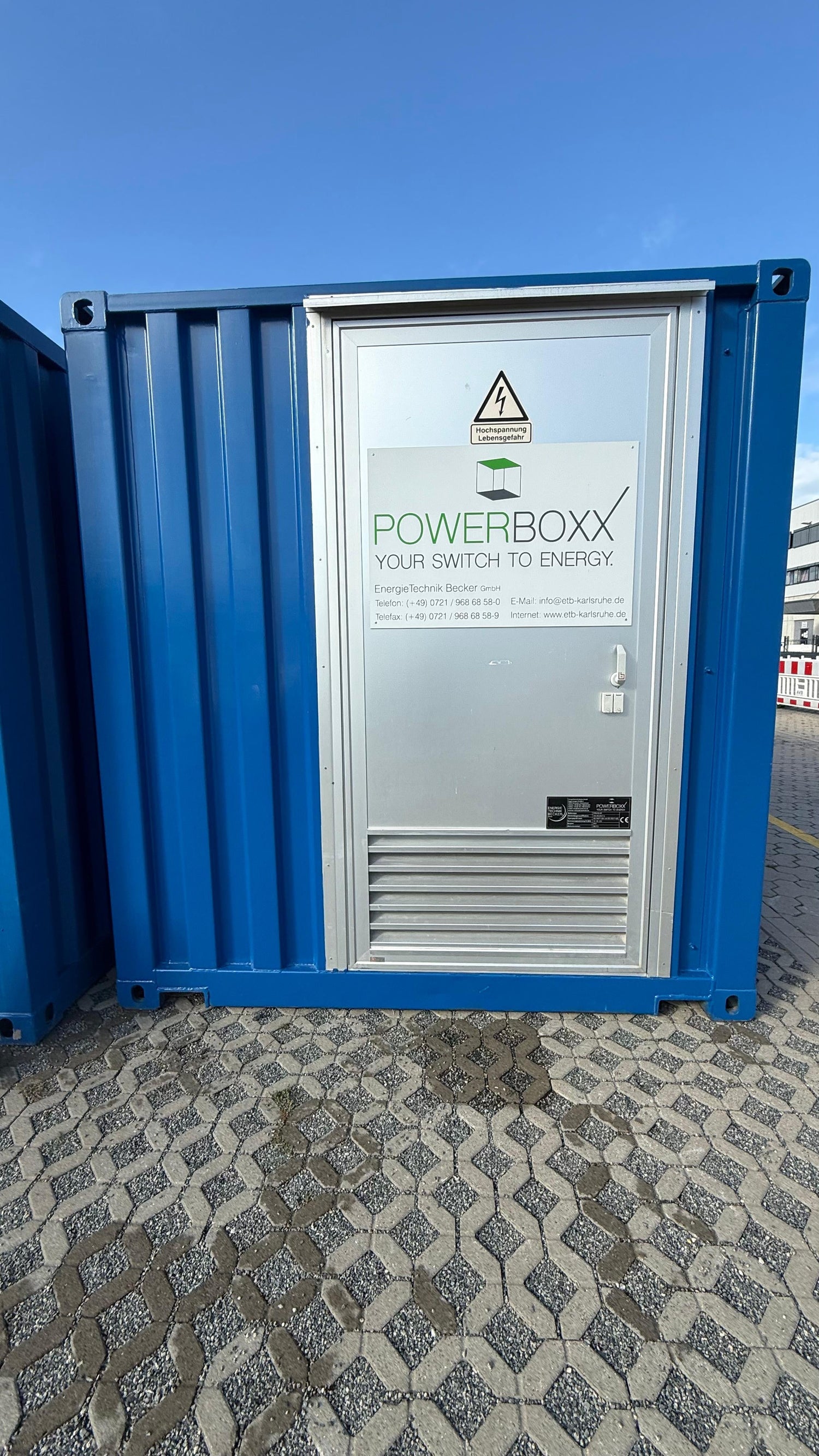
From concept to commissioning: How a professional construction power station is created
When cranes, machinery, container systems, lighting systems, and charging infrastructure on a construction site need to be reliably supplied with energy, it all begins with careful planning. Modern construction power stations are no longer standard products. They are individually developed energy systems that are precisely tailored to the requirements of a project.
But how is a construction power station actually created? What steps are necessary before it can be used on a construction site? And why is the manufacturer's experience so crucial?
We provide insight into the development and manufacturing of modern construction power stations.
Construction power stations are complex energy systems today
Many people imagine a construction power station to be merely a distribution board with sockets. In reality, however, modern systems perform significantly more extensive tasks.
Depending on the project, construction power stations can integrate the following components:
-
Medium voltage technology
-
Transformers
-
Low voltage distribution
-
Protection and measurement technology
-
Grid monitoring
-
Load management
-
Remote monitoring systems
-
Charging infrastructure
-
Emergency power solutions
Especially in industrial projects, infrastructure measures, or large construction sites, all components must be precisely coordinated.
Step 1: Analysis of energy demand
At the beginning of every project is the question:
How much power is actually needed?
Various factors are considered for this:
-
Number of consumers
-
Power consumption of machines
-
Use of cranes
-
Construction containers
-
Lighting
-
Charging infrastructure
-
Peak loads
-
Future expansions
A professional load analysis prevents subsequent overloads and ensures an economical design of the system.
Especially for larger projects, an undersized power supply can quickly lead to failures, construction delays, and significant additional costs.
Step 2: Technical Engineering
Once the requirements are defined, the actual planning phase begins.
Here, the engineering team develops the overall technical solution.
Among other things, the following questions are answered:
-
Which voltage level is required?
-
Is a transformer necessary?
-
Which protection concepts are required?
-
How is the energy distributed?
-
Which reserves are planned?
-
Which grid connection conditions apply?
In this phase, the technical concept of the construction power station is created.
A modern construction power station is not considered in isolation, but as part of the project's entire energy infrastructure.
Step 3: Selection of components
The quality of a construction power station depends significantly on the installed components.
Among other things, the following are used:
Transformers
They convert the provided voltage into the required supply voltage.
Switchgear
They ensure the safe control and distribution of energy.
Protection technology
It protects people and systems from short circuits, overloads, and other electrical faults.
Measurement technology
It enables the monitoring and analysis of energy flows.
The selection is always project-specific and based on the requirements of the later installation site.
Step 4: Safety is the top priority
In the development of a construction power station, the protection of people and systems comes first.
Modern systems must meet numerous requirements:
-
Protection against accidental contact
-
Short-circuit protection
-
Residual current protection
-
Overload protection
-
Weather protection
-
Fire protection
-
Occupational safety regulations
In addition, national and international standards must be observed.
These include, among others:
-
DGUV Regulation 3
-
DIN-VDE guidelines
-
Grid operator specifications
-
Other project-specific requirements
Professional planning ensures that the system not only functions but can also be operated safely long-term.
Step 5: Manufacturing and construction of the construction power station
After the planning is completed, the implementation begins.
Now all components are brought together into a functional overall system.
This includes:
-
Mechanical construction
-
Installation of switchgear
-
Installation of transformers
-
Wiring
-
Integration of protection technology
-
Installation of measurement systems
-
Labeling and documentation
Every step is carried out according to clearly defined quality standards.
Step 6: Testing before delivery
Before a construction power station leaves the factory, it undergoes comprehensive testing.
Among other things, the following are checked:
-
Electrical functions
-
Protection systems
-
Switching operations
-
Measurement systems
-
Safety functions
-
Documentation
The goal is to rule out possible errors before commissioning.
The testing is a crucial component for subsequent operational safety.
Step 7: Transport and commissioning
After successful completion, the construction power station is transported to the site.
On-site, the following take place:
-
Installation
-
Connection to the supply grid
-
Functional testing
-
Commissioning
-
Instruction of responsible persons
Only then does the system take on its role as the central energy supply for the project.
Why individual construction power stations are becoming increasingly important
The demands on modern construction sites are constantly changing.
Today, construction power stations often have to perform significantly more than they did just a few years ago.
New challenges arise, for example, from:
-
Electromobility
-
Fast charging infrastructure
-
Digitalization
-
Energy-intensive machinery
-
Increasing power demands
-
Intelligent monitoring systems
Standard solutions often reach their limits here.
Individually developed construction power stations, on the other hand, allow for precise adaptation to the actual project requirements.
Why the manufacturer's experience is crucial
A construction power station consists of much more than individual electrical components.
Only the right combination of:
-
Engineering
-
Planning
-
Protection concepts
-
Knowledge of standards
-
Manufacturing competence
-
Practical experience
leads to a reliable and economical solution.
The more complex a project becomes, the more important the manufacturer's experience.
EnergieTechnik Becker: From planning to commissioning
EnergieTechnik Becker develops individual construction power stations for construction companies, industry, infrastructure projects, and energy suppliers.
We support our customers throughout the entire project:
-
Analysis and consulting
-
Engineering
-
Technical planning
-
Manufacturing
-
Testing
-
Commissioning
-
Service and support
This creates customized solutions for a safe and reliable energy supply.
Conclusion: A modern construction power station is not off-the-shelf
Behind every professional construction power station lies an extensive development and manufacturing process.
From the initial load analysis to technical engineering and commissioning, numerous steps are necessary to ensure a safe, economical, and powerful energy supply.
Companies particularly benefit from manufacturers who not only supply products but develop holistic energy solutions.
Because a reliable construction power supply is one of the most important prerequisites for the success of every construction and infrastructure project.